
Starting and Running a Seed Library
What you need to know to start and maintain a seed library
Rules of Thumb
We have found that the longevity of seed libraries is greatly improved by keeping in mind two rules of thumb:
Keep things as simple as possible.
Remove all roadblocks that could keep people from using or accessing your seed library.
Setting up a seed library
Location
In the best case scenario, you would want the seed library to be located in a temperature controlled area (like a library, office, stores, etc.). However, if it’s not possible, it doesn’t have to be perfect. For example, seed libraries can be run out of plant exchange stands or little free library structures.
Who can run a seed library
Anyone, any age can run a seed library! You could be a librarian who wants to establish one at your branch, a master naturalist, a native plant society, or any person with an interest in the environment. Sometimes they are led by a single individual, or a whole group may be involved.
Getting seeds donations
We find the most success with getting donations when you don’t put too many requirements on them. There are just a handful of musts:
Donors should give you the seeds in a bag or container that they don’t want back. Most preferable is for the seeds to be in something breathable, like a paper bag or envelope.
Donors should write the name of the seed and the date collected on the bag. This is the minimum – if they wish they could also include more information on the variety or growing conditions on the packet.
The seed donations may still be attached to stems or inside pods, also known as bulk seeds. You will need to host seed gathering events to clean and pack them for the public (see the below section: “Hosting a seed processing event”).
What kind of seeds should you accept? Many seed libraries accept vegetables, native plants and wildflowers. Tree seeds are large in size and don’t last long, and fewer people come to seed libraries seeking them. So if a donor happens to bring tree seeds, we have found it to be best to pass those along to a partner who can use them, such as a reforestation organization or a local tree nursery. Our Seed to Tree Partnership with Treefolks is an example.

Building your seed library
The library itself can be as simple as a basket – you really just need a structure to contain seed packets. Just keep in mind that you want to be able to contain a volume of seeds, and for people to be able to look through the packets easily.
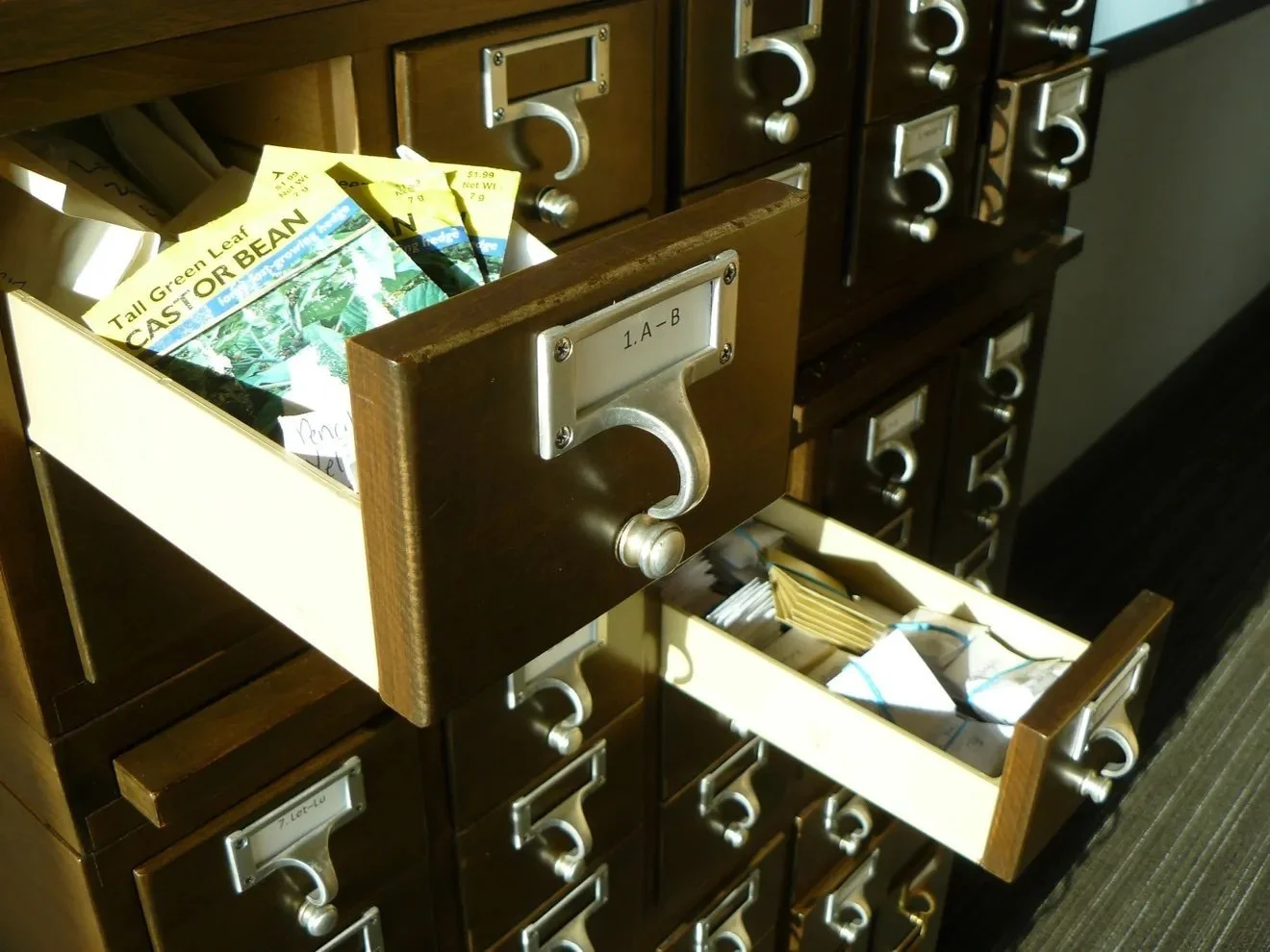
Seed libraries have been creatively housed in a variety of structures, ranging from carts and converted mailboxes to repurposed card catalogs and little free libraries. Alphabetically ordering your varieties inside helps users sort through more easily.
Signage
If you need signage for your seed library… Use this if you need a flyer for your new seed library and you are not part of the Austin Public Library. If the donation location is different from the seed library location, fill it out on the sign (e.g. “office front desk”). If you need a flyer for your new seed library and you are a part of the Austin Public Library, use this flyer.
Literature
We recommend printing the Texas A&M month-by-month vegetable planting chart for Travis County out and keeping this at your seed library for users to reference. Add gardening books to check out from the library and more gardening info to your seed library display if possible. The Seed Library Network also has resources for seed saving and gardening available. See link below.
Placing limits
Setting a limit on the number of seed packets that users can take per visit (such as 3 or 4) helps ensure that people use what they take, and encourages the proliferation of seed varieties across a multitude of gardens.
Accessibility
Removing roadblocks for people to use your resource is key, and improves accessibility. For example, if you are running the seed library out of a library, then don’t require that someone has a library card to take seeds. If you are able to translate any signage into different languages as well, that will improve accessibility too.
Get on the map
If you are a library that is completely new, get on the maps! For one, email us at libraries@centexseedsavers.org to inform us of your existence and to get added to our map. Secondly, click this link to add yourself to the Seed Library Network’s national map.
Kicking off and spreading the word
A great way to kick off your new seed library is by organizing a seed swap (see the below section “Hosting a seed swap”).
Maintaining your seed library
Now that your seed library is set up, how do you keep a healthy stream of seeds coming in?
Getting seed donations
The best way to get donations is to leverage relationships and connections you already have. Here are some examples of ways you can get seeds:
Ask your local gardeners, master naturalists, nearby Native Plant Society of Texas chapters, and gardening clubs if they would consider donating.
If you have volunteers, ask them if they have seeds.
Hold a seed swap event (see below, “Hosting a seed swap”). Keep the leftover seeds after the swap for the library. These events also raise public awareness and interest in the library.
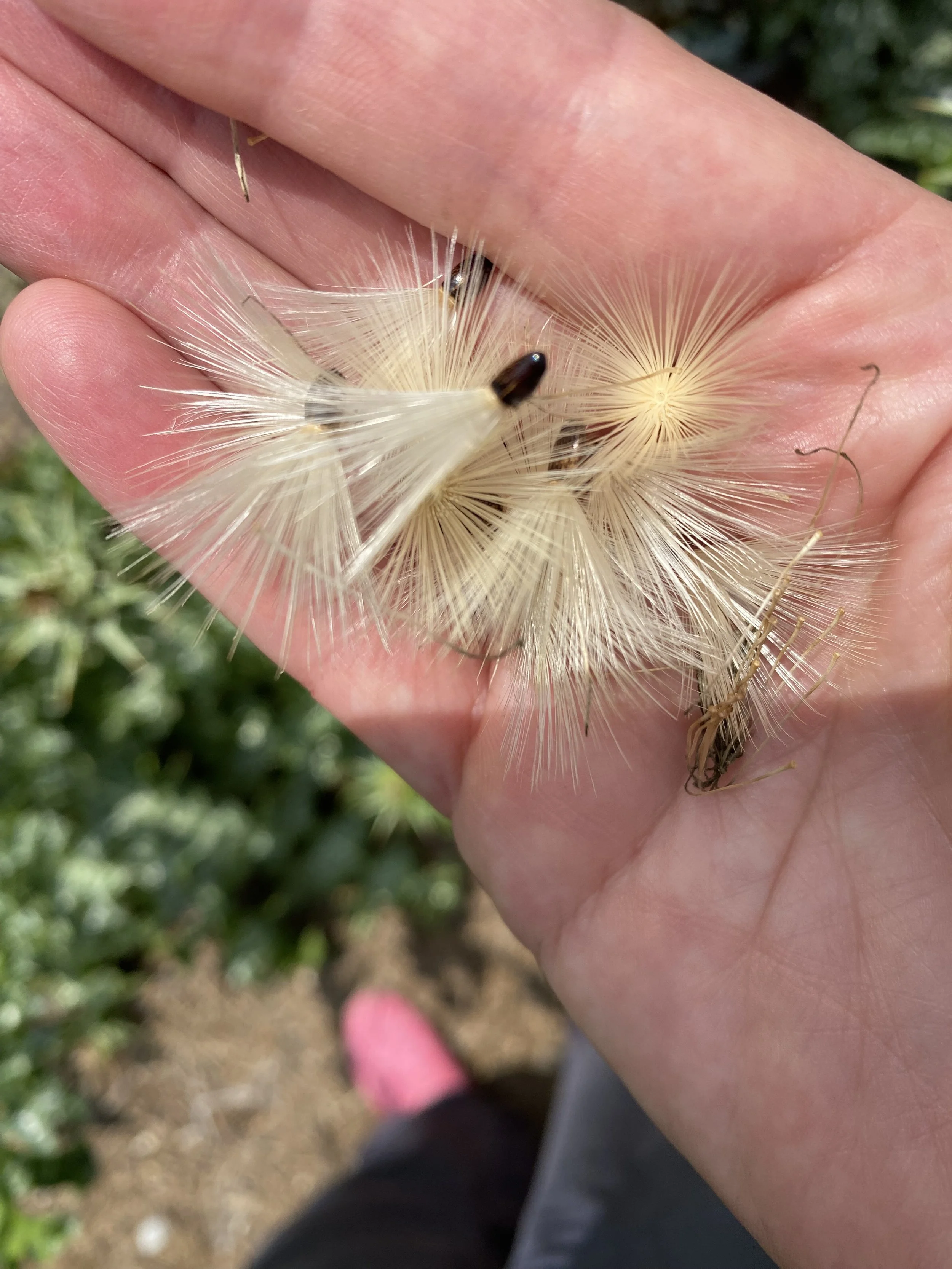
Check with local nurseries for seed donations. If they give you packets of seeds that are beyond their expiration date, many varieties remain viable. Although expired seeds can have a lower germination rate, properly stored seeds can last for years and are generally suitable for home gardens.
Once you have had a few seed swaps, you can also reach out to people who have brought a lot of seeds to swaps in the past to ask if they have donations.
Hosting a seed swap
The goal: To hold a gathering for people to donate and get seeds, and to foster your community.
For a seed swap, you’ll need:
Tables to set everything up
Spare envelopes for seeds
Tape to close envelopes
Writing utensils for labeling
Rules for the swap:
Attendance should be free of charge. Not requiring a ticket/sign-up/library card also reduces any barriers of entry
It’s helpful to sort your seeds by category - such as vegetables, herbs, flowers, native, etc. so that people can more easily find what they’re interested in.
For attendees, it’s not required to bring seeds to the swap.
For people who do bring seeds, however, they must label their donation with the name of the seed and year of harvest.
Attendees can take seeds packets if already individually packaged for takeaway. Or else they can use a spare envelope to take what they need from a large batch, labeling their envelope with the seed’s name and year, and sealing the envelope with tape.
Ask people to only take what they will use this year, and let them know they can donate to seed libraries in the future to keep the cycle going.
Hosting a seed processing event
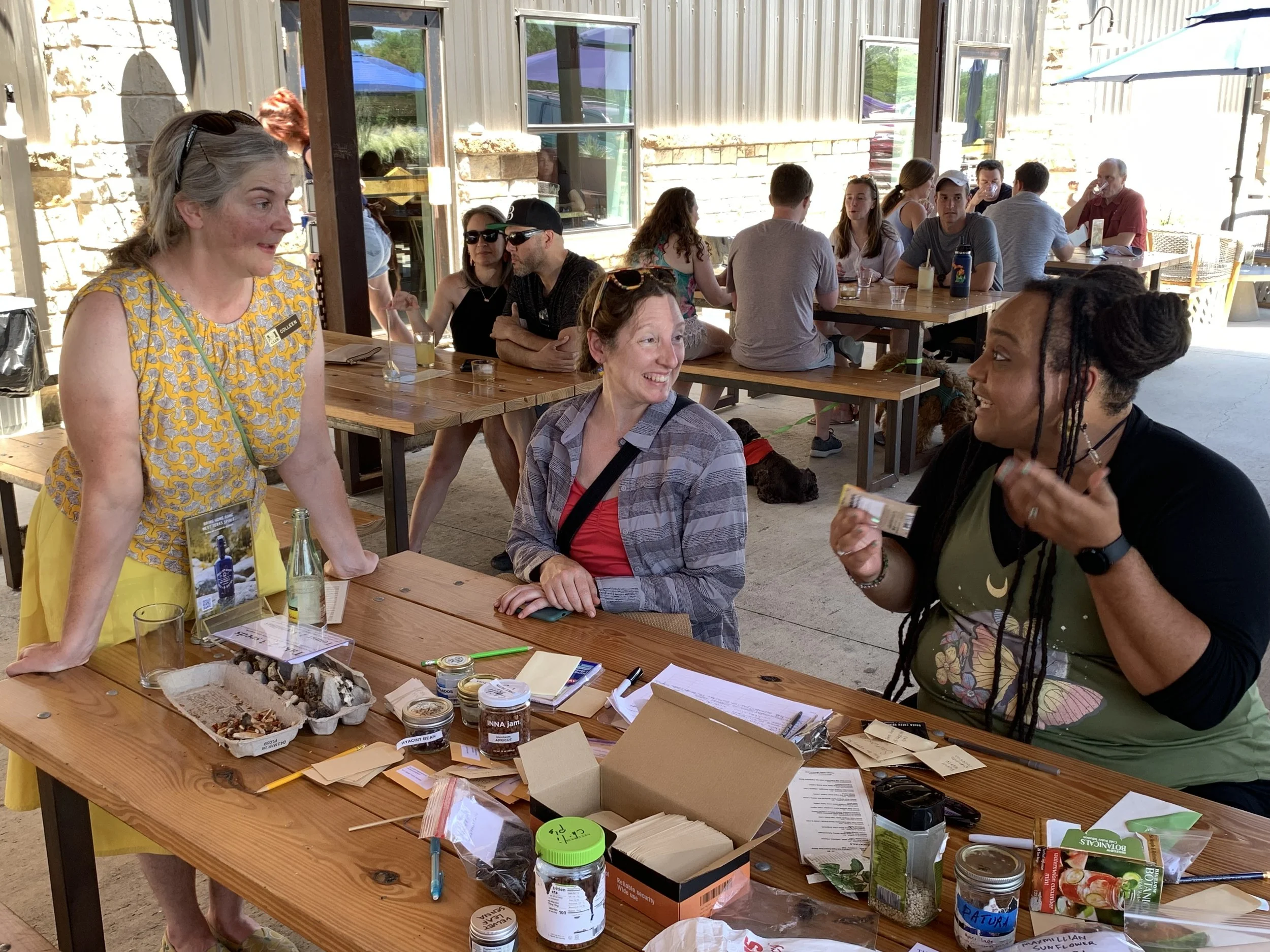
The goal: To process seed collection donations and have a place to share or donate seeds. Anyone can attend to help and learn about seeds. This can be a way for people who might have mobility issues or who cannot have their own garden to take part.
Rules for the event:
It can help to pick a recurring time and day when the event will be held each month.
Volunteers should extract seeds out of pods and discard stems. Seeds should then be packed into envelopes or seed packets with the name of the seed and year collected written on them.
For more complex cases in which it’s hard to figure out what part of the donation is the seed, it’s helpful to 1) have someone there who knows how to extract the seed 2) look up and print out pictures of how to extract the seed before the event.
Further reading/resources
If you want to read more on seed libraries, check out the following resources:
Seed Libraries: And Other Means of Keeping Seeds in the Hands of the People (book)
Seed Library Network has a great substack about seeds and maintaining seed libraries
Seed to Seed, by Suzanne Ashworth (book)
The Seed Garden: The Art & Practice of Seed Saving (book), edited by the Seed Savers Exchange
Questions?
Email libraries@centexseedsavers.org